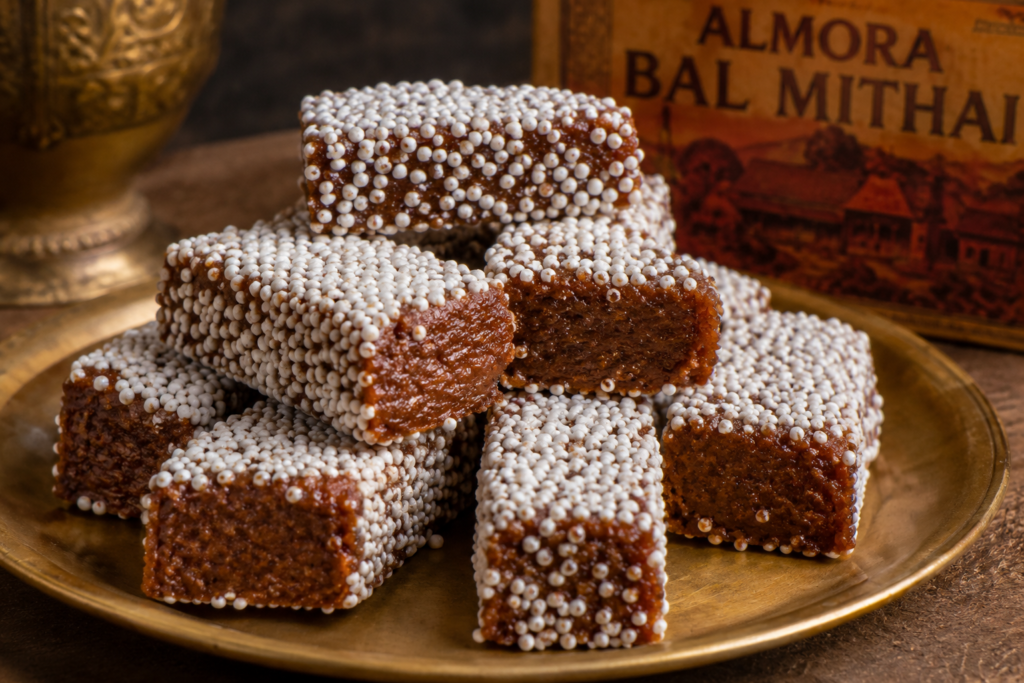
When people speak of Uttarakhand, they often remember its snow-covered peaks, sacred temples, and breathtaking valleys. Yet, beyond its landscapes lies a culinary treasure that has become the identity of the Kumaon region; Baal Mithai. Rich, caramelized, and coated with tiny white sugar pearls, this iconic sweet is much more than a dessert. It is a symbol of tradition, craftsmanship, and the cultural heritage of Uttarakhand.
A Sweet Born in the Hills
Baal Mithai is most closely associated with Almora, a historic town in the Kumaon region of Uttarakhand. Food historians generally agree that the sweet gained popularity during the late nineteenth and early twentieth centuries through the halwai families of Almora. One of the most widely accepted accounts credits Lala Joga Lal Sah, whose confectionery became famous for popularizing the sweet in its present form. While some oral traditions suggest influences from neighboring Nepal, there is no conclusive historical evidence proving that claim. What remains undisputed is that Almora transformed Baal Mithai into the cultural icon it is today.
Why Is It Called “Baal Mithai”?
The word “Baal” refers to the tiny sugar-coated balls that cover the sweet. These miniature sugar pearls create a delightful contrast with the soft, fudge-like interior. Unlike many Indian sweets that rely heavily on syrup or nuts, Baal Mithai is instantly recognizable because of this distinctive coating.
Its appearance often reminds visitors of chocolate fudge, earning it the nickname “Chocolate of the Hills.” Despite its chocolate-like color, the sweet contains no cocoa.
How Baal Mithai Is Made
Preparing authentic Baal Mithai requires patience and skill. The process involves:
- Fresh khoya (reduced milk solids) is cooked slowly over a low flame.
- Sugar is added, allowing the mixture to caramelize naturally until it develops a rich dark-brown color.
- The mixture is cooled and cut into rectangular pieces.
- Each piece is then coated with tiny white sugar balls that provide its signature texture.
The slow caramelization of khoya is the defining feature of Baal Mithai. This traditional method gives the sweet its deep flavor without the use of artificial coloring.
A Symbol of Kumaoni Culture
In Uttarakhand, Baal Mithai is more than a festive delicacy. It is commonly exchanged during weddings, religious ceremonies, festivals, and family celebrations. Travelers visiting Almora often carry boxes of Baal Mithai back home as souvenirs, making it one of the state’s most recognized food products. Alongside Singori, another famous Kumaoni sweet wrapped in Maalu leaves, Baal Mithai represents the rich dairy, based culinary traditions of the Himalayan region.
Tradition Meets Tourism
Over the decades, Baal Mithai has become an important part of Uttarakhand’s food tourism. Visitors exploring Kumaon rarely leave without tasting this local specialty. The sweet has helped preserve traditional confectionery practices while supporting generations of local sweet makers in Almora and nearby towns. Today, Baal Mithai is available across Uttarakhand and in several cities across India, yet connoisseurs still believe the authentic taste belongs to the hills where it originated.
Protecting a Culinary Heritage
Researchers and intellectual property experts have highlighted the importance of protecting Baal Mithai as a regional specialty through Geographical Indication (GI) recognition. Such protection helps preserve traditional recipes, safeguards local producers, and promotes Uttarakhand’s unique culinary identity on a national and international level.
Nutritional Perspective
Like most traditional milk-based sweets, Baal Mithai is rich in dairy fats, carbohydrates, and energy. Khoya provides calcium and protein, while sugar contributes sweetness and shelf life. Owing to its richness, nutrition experts recommend enjoying it in moderation as part of a balanced diet.
Conclusion
Baal Mithai is not merely a sweet, it is a story of Uttarakhand’s history, craftsmanship, and cultural pride. Every bite reflects generations of culinary knowledge preserved in the kitchens and sweet shops of Almora. Whether enjoyed during festivals, gifted to loved ones, or carried home by travelers, Baal Mithai continues to represent the warmth and traditions of the Kumaon hills.
For anyone wishing to experience the true taste of Uttarakhand, Baal Mithai is more than a dessert—it is a delicious piece of the state’s living heritage.